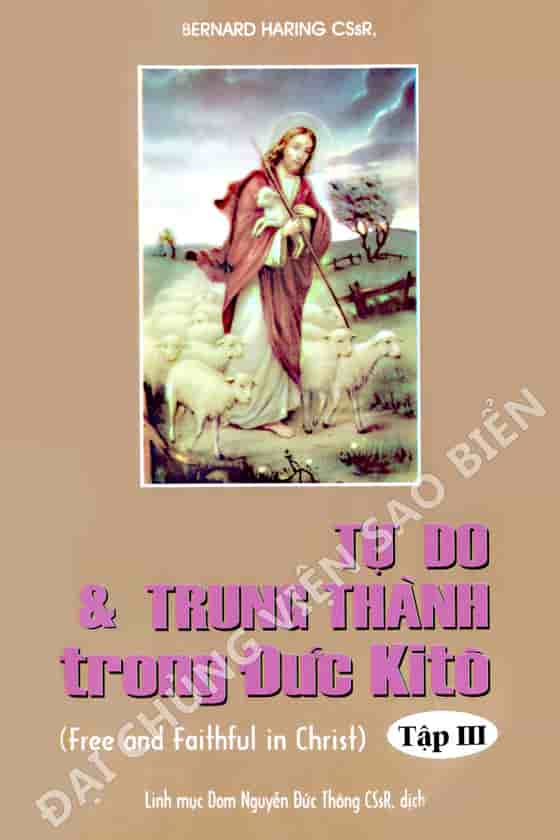
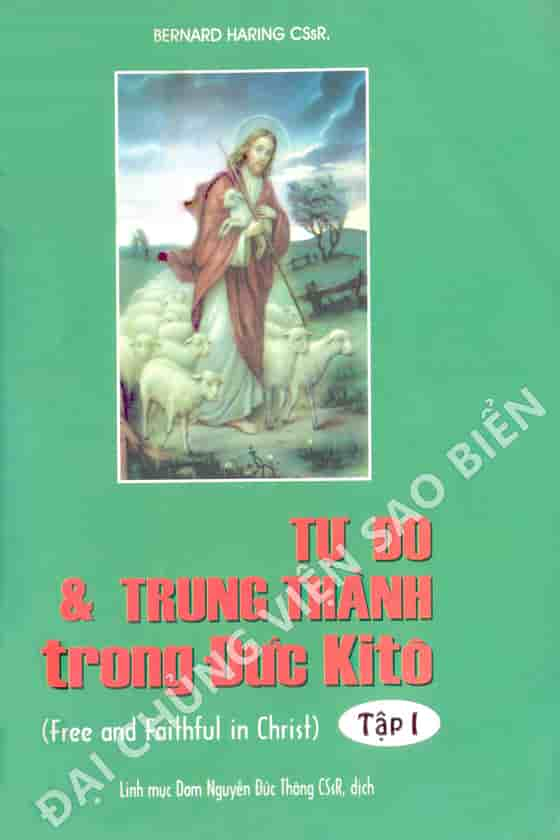
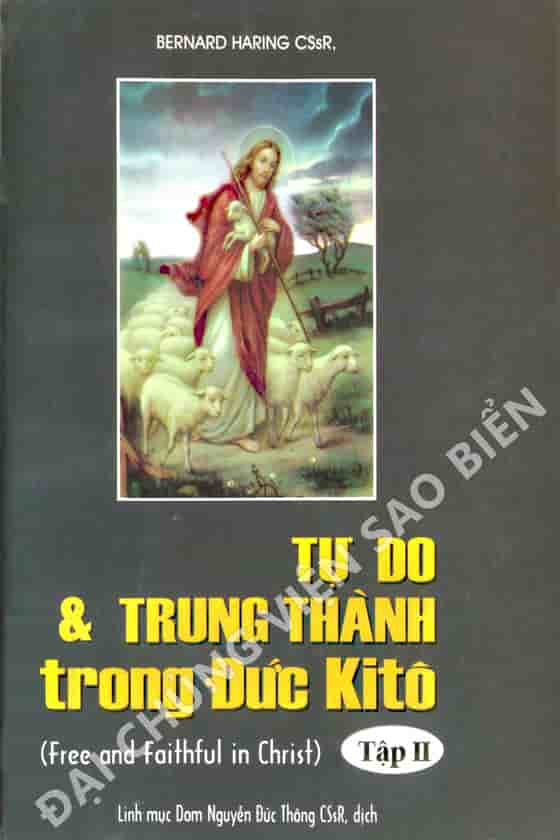
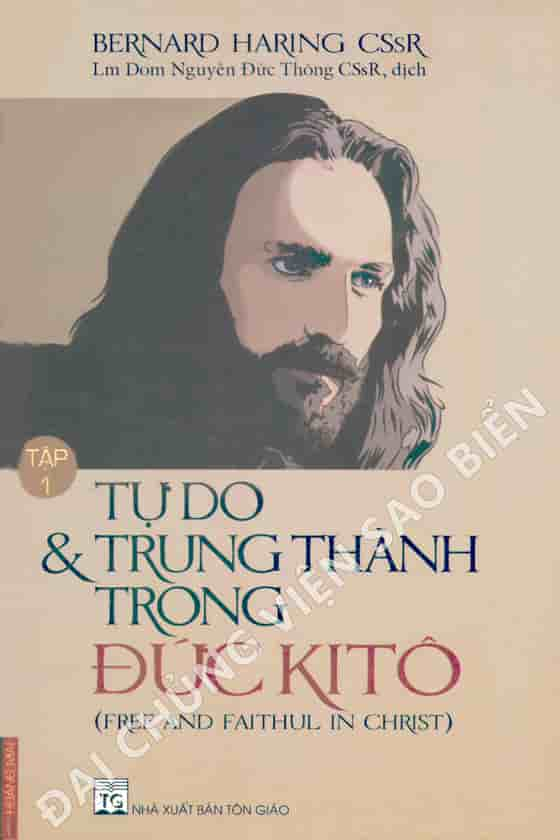
| Free And Faithful In Christ | |
| Phụ đề: | Moral Theology For Priests And Laity Volume 3 Light To The World, Salt For The Earth |
| Tác giả: | Bernard Haring |
| Ký hiệu tác giả: |
HA-B |
| DDC: | 241 - Thần học luân lý |
| Ngôn ngữ: | Anh |
| Số cuốn: | 1 |
Hiện trạng các bản sách
|
||||||||||||||
| contents | |
| introduction 1 | 1 |
| part one: Bioethics | |
| chapter one responsibility for human life and its transmission | |
| I. meaning and value of human life | 4 |
| II. The beginning off human liffe | |
| 1. the origin of the genotype | 5 |
| 2. the moment of diversification | 7 |
| 3. the cerebral cortex nd hominization | 8 |
| 4. distincion between "human life" and "humnized life" | 9 |
| III. The transmission of life | 10 |
| 1. transmission of healthy life | 12 |
| 2. responsibility for healthy life of the fetus and child | 14 |
| 3. Popuation problems | 14 |
| 4. sterlization | 17 |
| 5. artificial intervention in human reproduction | 23 |
| IV. Abortion | 27 |
| 1. A moral and social-legal question | 27 |
| 2. spontaneous and not so sopontaeous abortion | 29 |
| 3. selective abortion | 30 |
| 4. abortion as birth control | 32 |
| 5. life-saving interruption of pregnancy | 32 |
| 6. therapeutic abortion in the broder sense | 33 |
| v. sins against human life | 34 |
| 1. letting die | 34 |
| 2. causing death by neligence | 35 |
| 3. suicide | 35 |
| 4. murder and participation in mass murder | 36 |
| 5. the death penalty | 38 |
| chapter two on health and healing | 42 |
| I. meaning and value of human health and healing | 42 |
| 1. christ the " saviour and the healer" | 44 |
| 2. faith healing, praer and healing | 45 |
| 3. sense and nonsense of sickness and suffering | 47 |
| 4. what is human health? | 48 |
| 5. personal and social responsibility for heath | 49 |
| II. The healing profession | 50 |
| 1. the ethos of the phsicion | 51 |
| 2. Denial of death in medical practice | 52 |
| 3. Suicide and euthanasia | |
| 4. Duty to prevent suicide | 53 |
| 5. Against legalization of euthanasia | |
| III. THE MOMENT OF DEATH AND THE PROCESS OF | |
| DYING | |
| 1. Cortical death versus cardiac arrest | |
| 2. Artificial reanimation | 90 |
| 3. The irreversible coma | 90 |
| 4. Organ transplant | 91 |
| 5. Legal regulation of transplant from a cadaver | 93 |
| IV. THE HEALING PROFESSION AND THE MORIBUND PATIENT | 94 |
| 1. Favouring consciousness, freedom and | |
| communication | |
| 2. The moribund's patient's right to truth | 95 |
| 3. Cooperation | 97 |
| 4. After death | 97 |
| V. ADDING LIFE TO THEIR DAYS OR PROLONGING THE | |
| DEATH PROCESS? | 98 |
| II. THE RELATIONSHIP BETWEEN THE CHURCH AND THE WORLD | 128 |
| 1. Abiding mission and changeable structures | 129 |
| 2. From the beginnings to the Constantinian era | 131 |
| 3. Martin Luther's "two reigns and regiments" | 133 |
| 4. Powerless and prophetic presence | 137 |
| III. THE WORLD AND THE SIGNS OF THE TIMES | 141 |
| 1. One world and one history | 142 |
| 2. Authentic secularity and a spurious secularism | 143 |
| 3. Adoration in Spirit and truth as the guarantor of authentic secularity | 147 |
| 4. Autonomous morality within the horizon of faith | 148 |
| IV. VOCATION AND SANCTITY IN THE WORLD | 151 |
| 1. On the history of a theology of vocation | 151 |
| 2. Luther's concept of vocation | 152 |
| 3. Sanctity in marriage and family | 153 |
| 4. The crisis of the priestly vocation | |
| 5. Vocation, profession and the "job" | |
| 6. The arduous professions-vocations | 156 |
| V. CONSERVING OR CHANGING THE WORLD? | |
| 1. Orientation towards the future and its implications | 158 |
| 2. The ideology of progress and Christian sobriety | 159 |
| 4. Process theology and ecology | 177 |
| 5. A dynamic sacramental view | 178 |
| 6. Human ecology and our final hope | 179 |
| 7. For a sober and chastened anthropocentrism | 180 |
| 8. Ecology and a new understanding of property and ownership | 182 |
| 9. From a culture of wastefulness to a new asceticism | 183 |
| III. ECOLOGICAL CONSCIENCE AND ITS OBSTACLES | |
| 1. The ideology of constant growth and expansion | |
| 2. Established habits and patterns | |
| 3. Vested interests | 187 |
| 4. Nationalism and hegemonism | |
| 5. The megalopolis | |
| 6. Science and technocracy | 190 |
| 7. What kind of radicalism? | 192 |
| IV. ECOLOGICAL STRATEGY | 192 |
| 1. Ecological education | 192 |
| 2. Personal and shared initiatives | 193 |
| 3. Ecological politics | 193 |
| 4. Reconciliation between man and technology | 196 |
| 5. Global development | 198 |
| 6. Nuclear energy and alternatives | 200 |
| 7 Limite of population growth | 201 |
| 201 | |
| 4. A prophetic ministry | 258 |
| IV. HISTORICITY AND CONFLICT | 260 |
| 1. Confronting "historical materialism" | 261 |
| 2. Dialectic materialism and the role of conflict | 264 |
| 3. Christians and socialism | 267 |
| V. ECONOMY A COMMON ETHICAL TASK | 270 |
| 1. The great heresy | 270 |
| 2. God's saving justice and people's solidly united response | 272 |
| 3. Economy at the service of human needs | 276 |
| 4. Responsibility and subsidiarity | 277 |
| 5. Creative liberty | 279 |
| 6. Solidarity and fidelity | 280 |
| 7. Unethical conduct in business | 281 |
| VI. BEYOND CAPITALISM | 286 |
| 1. The free social market system | 287 |
| 2. Politics and economy | 288 |
| 3. Ownership and labour | |
| 4. The key role of work | 290 |
| 5. The function of capital and interest | 302 |
| 6. The role of management | 304 |
| 7. His majesty, the customer and just prices | 306 |
| chapter eight the ethics of politics | 327 |
| 1. the political dimension of social life: all-ptrvansive but not exclusive | 327 |
| 2. political thelogy | 332 |
| 3. christian politics or politics of christians | 335 |
| 4 church community and politics | 338 |
| 5. the horizon of politics interaction and responsibility | 338 |
| 6. the possibility and necessity of a political ethics | 347 |
| II. Politics in the light of the history of creation, sin, redemption | 351 |
| 1 redemption-liberationn and forgiveness in the midst of conflict | 352 |
| 2. the role of the state in a fallen-redeemed world | 353 |
| 3. taxes | 357 |
| 4. power, redeemed or unredeemed | 359 |
| 5. criminal law, enforcement and rehabilition | 364 |
| IV. Towards a world community | 381 |
| 1. NEW DMENSIONS OF NATURAL LAW AND THE "LAW OOF NATIONS" | 382 |
| 2. SOVEREIGN STATES AND SUPER-POWERS | 383 |
| 3. THE THREAT OF A SUEPER-STATE | 384 |
| 4. THE FEDRAL PRINCIPLE OF A WORLD AUTHORITY | 385 |
| III. LIBERATION FROM THE SLAVERY OF WAR | 406 |
| 1. The time has come | 406 |
| 2. Conscientious objection and prophetic protest | 407 |
| 3. Spirituality and relevance of non-violent action | |
| 4. Disarmament | |
| IV. PEACE RESEARCH AND PEACE POLICY | 414 |
| 1. Meaning and purpose of peace research | 415 |
| 2. From peace research to peace policy | 416 |
| 3. New structures for peace | 417 |
| V. PEACE EDUCATION | 418 |
| 1. Spirit and purpose of peace education | 418 |
| 2. Learning the art of peace in the midst of conflict | 420 |
| V. THE CHURCH, SACRAMENT OF PEACE | 421 |


Các tác phẩm cùng thể loại
-
-
-
-
-
-
-
-
-
-
-
-
 Tác giả: Vô Danh
 -
-
-
-
-
-
-
-
 Tác giả: Jos Võ Quý
 -
-
-
-
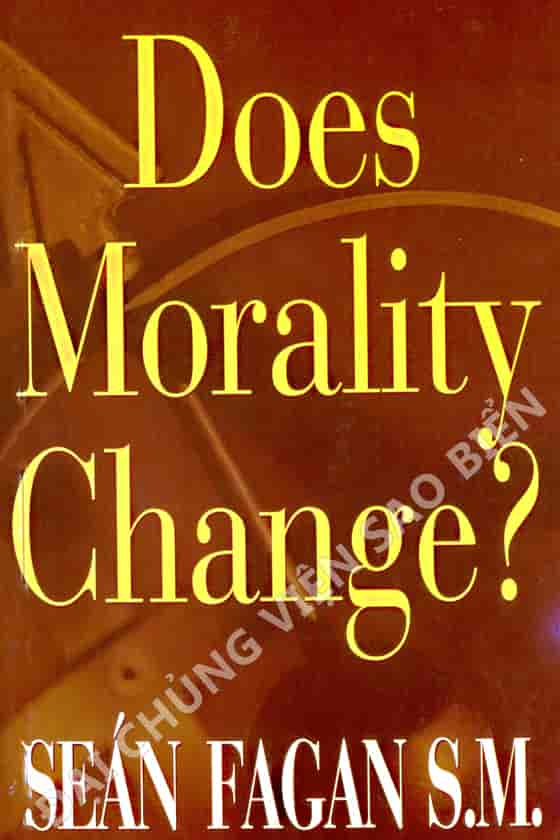 Tác giả: Seán Fagan, S.M.
 -

-
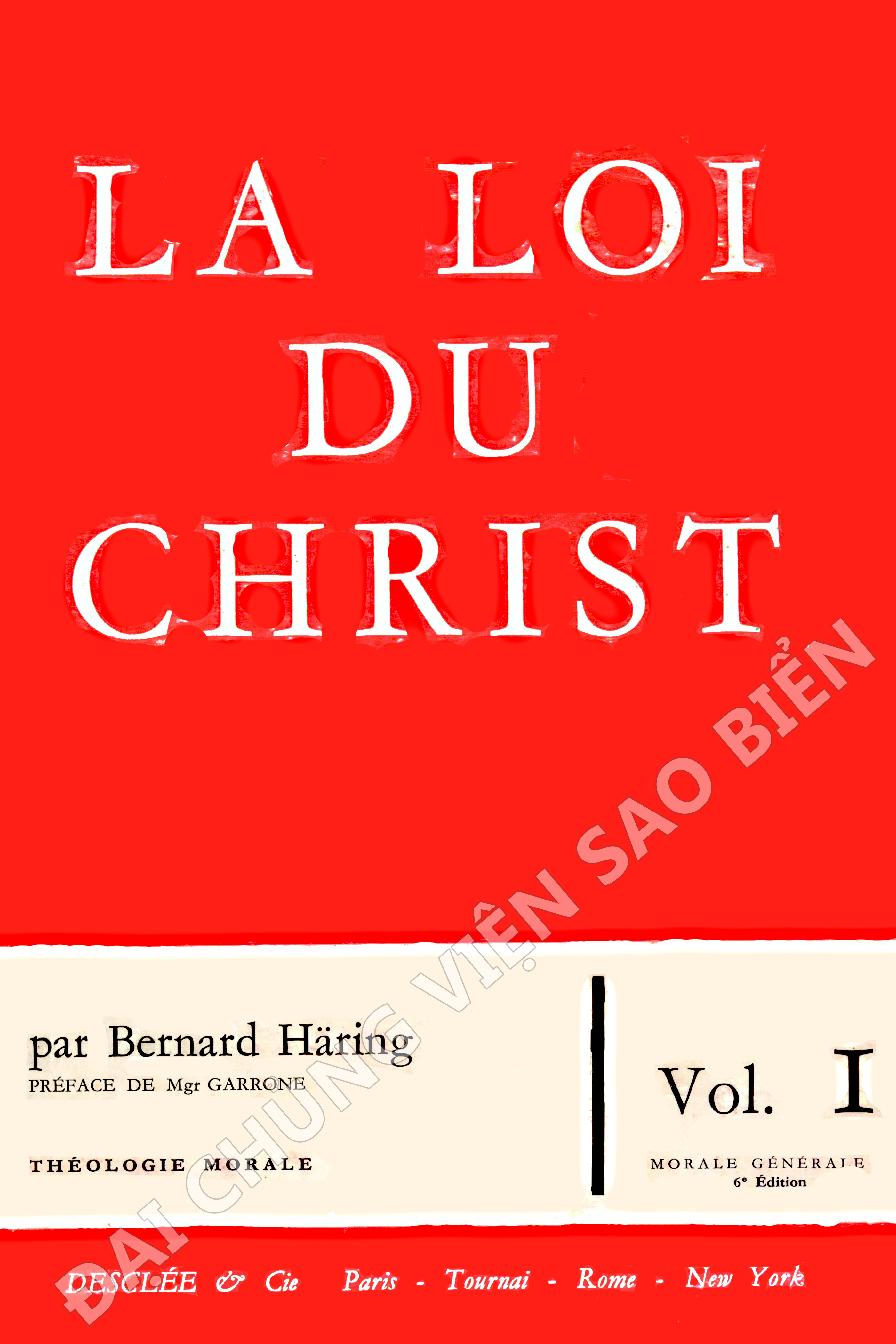
-

-
-
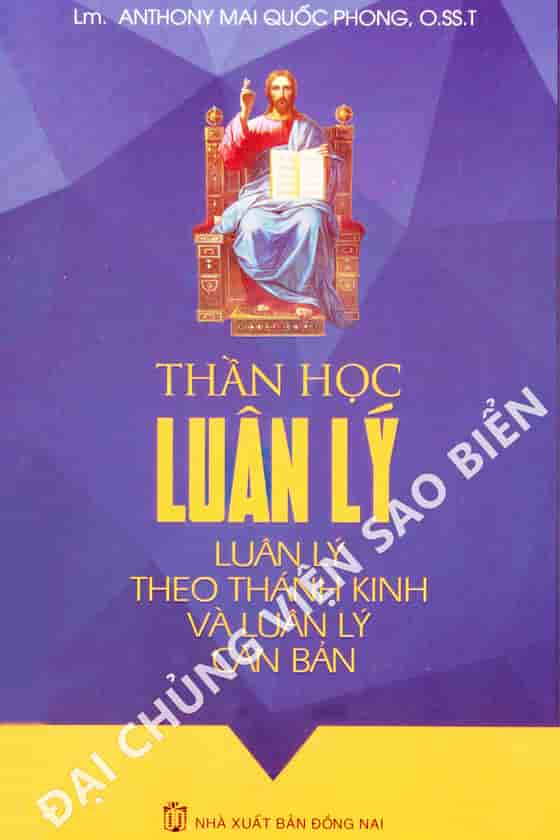
-
 Tác giả: Bernard Haring, CSsR.
 -
-

-
 Tác giả: Llltud Evans
 -
-
-

-
-

-
 Tác giả: Lm. Mark, CMC
 -
-
 Tác giả: Bernard Haring
 -
-
-
 Tác giả: L. Muller
 -
-
-
-

-
-
 Tác giả: Robert Gascoigne
 -
-
-
-
-
-
-
-
 Tác giả: Théodule Rey & Mermet
 -
 Tác giả: Réginald Garrigou-Lagrange, O.P
 -
-
-

-
-
 Tác giả: James Keenan
 -
 Tác giả: Livio Melina
 -
-