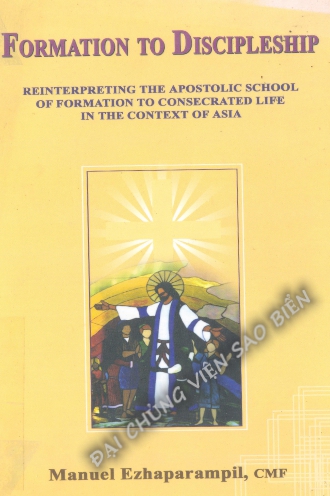
| Formation To Discipleship | |
| Phụ đề: | Reinterpreting The Apostolic School Of Formation To Consecrated Life In The Context Of Asia |
| Tác giả: | Manuel Ezhaparampil |
| Ký hiệu tác giả: |
EZ-M |
| DDC: | 266 - Truyền giáo |
| Ngôn ngữ: | Anh |
| Số cuốn: | 1 |
Hiện trạng các bản sách
|
||||||||||||||||
| Dedication | iii |
| Acknowledement | iv |
| Abbreviations | v |
| CHAPTER I: INTRODUCTION | |
| 1. Background of the study | 2 |
| 2. Statement of the problem | 4 |
| 3. Significance of the study | 5 |
| 4. Objectives of the study | 7 |
| 5. Scope and Limitations of the study | 8 |
| 6. Review od related Literature and sutdies | 9 |
| 7. Methodology | 13 |
| 8. Definition of terms | 15 |
| 9. Division of Dissertation | 17 |
| CHAPTER II: DISCOVERING THE IDENTITY OF RELIGIOUS LIFE AND THE TASK OF FORMATION | |
| Introduction | 19 |
| 1. Understanding the identity of religious Life from a theological perspective | 21 |
| 1.1 The common understanding from Vat. II to our times | 22 |
| 1.2 Religious life as a form of Discipleship | 23 |
| 1.3 Religious life as a fact in the church | 25 |
| 1.4 Religious life as a Charism of the spirit | 26 |
| 2. Understanding the identity of religious life from a formative perspective | 27 |
| 2.1 The experience of God | 27 |
| 2.1.1 The mystical experience is a loveing union with the divinity | 28 |
| 2.1.2 The process as 'initial experience-desire-search-more experience' | 30 |
| 2.1.3 Prayer and silence as means to this experience | 31 |
| 2.2 Following of Jesus | 32 |
| 2.2.1 Acall and a response | 33 |
| 2.2.2 A call to follow and identify with Jesus who revealed God in the World | 36 |
| 2.2.3 Following leads to Discipleship and witnessing | 38 |
| 2.3 Witnessing the Kingdom of God | 38 |
| 2.3.1 Discovering the Kingdom og God | 39 |
| 2.3.1.1 the Kingdom that Jesus preached | 40 |
| 2.3.1.2 Nearness of the kingdom | 41 |
| 2.3.2 Passion for the Kingdom | 41 |
| 2.3.2.1 A passion to experience the reality of the Kingdom | 42 |
| 2.3.2.2 An experience of liberation | 43 |
| 2.3.3 Commitment to the Kingdom | 46 |
| 2.3.3.1 Commitment to the values of the kingdom | 46 |
| 2.3.3.2 Commitment by a Consecrated Life | 49 |
| 3. Understanding the task of formation | 52 |
| 3.1 Characteristics of formation | 52 |
| 3.1.1 Formation as a process | 53 |
| 3.1.2 Intergral and Integrationg formation | 54 |
| 3.1.3 Gradual and Progressive formation | 54 |
| 3.1.4 Liberating and Prophetic formation | 55 |
| 3.2 Understanding formation from "Discipleship" perspective | 56 |
| 3.2.1 Formation to pracitce compassionate love | 56 |
| 3.2.2 Formation to forgive and serve onr another | 58 |
| 3.3 formation to experience God | 59 |
| 3.3.1 Experiencing "wholeness" from "fragmentation and emptiness" | 60 |
| 3.3.2 Spiritual diraction and prayer as means | 61 |
| 3.4 Formation to witness the Kingdom of God | 62 |
| Conclusion | 66 |
| CHAPTER III | |
| UNDERSTANDING DISCIPLESHIP AND CHARACTERISTICS OF THE APOSTOLIC SCHOOL | |
| Introduction | 68 |
| 1. Discipleship as the core of christian life | 69 |
| 1.1 Conditions of discipleship | 70 |
| 1.2 Object of discipleship | 71 |
| 1.3 Discipleship demands identifying with the master | 72 |
| 1.4 Discipleship demands following the master | 74 |
| 1.5 Discipleship demands participation in his mission | 75 |
| 2. Characteristics of the apostolic school | 76 |
| 2.1 The Kingdom of God as the unique motivation | 78 |
| 2.2 To be with Him as a method | 79 |
| 2.3 Assuming the destiny of jesus | 80 |
| 2.4 Faith crisis and fidelity to Jesus | 81 |
| 3. Jesus as formator; disciples as formandee | 82 |
| 3.1 Jesus as formator of disciples | 84 |
| 3.2 The important aspects of Jesus' formation | 85 |
| 3.3 Revealing God as the central theme of formation | 86 |
| 3.3.1 Experience of God as Father (Abba) | 86 |
| 3.3.2 Experiencing God as compassionate and immanent | 91 |
| 3.3.3 Experiencing God's identity as Love and Forgiveness | 94 |
| 4. Disciples of Jesus: Prototype of Religious Life | 96 |
| 4.1 Disciples called to be a sign | 97 |
| 4.2 Disciples called to make a commitment | 98 |
| 4.3 Disciples called to continue Jesus' Mission | 99 |
| Conclusion | 102 |
| CHAPTER IV | |
| CONTEXT OF ASIA: IDENTIFYING THE RELIGIO-CULTURAL REALITIES AND THIER SIGNIFICANCE IN THE FORMATION TO CONSECRATED LIFE | |
| Introduction | 104 |
| 1. Identifying themulti religio-cultural realities and thier significance in formation to consequence life | 105 |
| 1.1. Hindu Sanyasi or Sadhus | 108 |
| 1.1.1 Sanyasin as an Ascetic | 110 |
| 1.1.2 Sanyasin as a man of simple life-style | 111 |
| 1.1.3 Sanyasin as a yogi | 113 |
| 1.1.4 Sanyasin as a Brahmachari | 116 |
| 1.1.5 Sanyasin in different colors | 118 |
| 1.2 Buddhisi monks or Bhikkhus | 121 |
| 1.2.1 Duddha as the first Bhikkhu | 121 |
| 1.2.2 Formation experence as an awakening experience | 122 |
| 1.2.3 Simple life-style | 124 |
| 1.2.4 Bhikkhu as one who does a "Holy life" _ A Brahmachari | 124 |
| 1.2.5 Bhikkhu as wandering itinerant monks | 125 |
| 1.3 Jain Monks or Digambaras | 127 |
| 1.3.1 Monks and their five great vows | 128 |
| 1.3.2 Becomeing a Jain religious | 128 |
| 1.3.3 Activities of a Jain monk | 129 |
| 1.3.4 Laity and the monk's spiritual path | 129 |
| 1.4 Islam and Sufism | 131 |
| 1.4.1 Sufis as mystics | 131 |
| 1.4.2 sufi Fraternities | 133 |
| Conclusion | 134 |
| 2. Identifying the changing Socio-cultuaral and Acclesial Realities of Asia | 135 |
| 2.1 Reality of traditional integration of religious, culture and community inder question | 137 |
| 2.2 Reality of poverty and massive inderdevelopment | 139 |
| 2.3 Reality of a changing culture | 140 |
| 2.4 Emerging dichotomy between Faith and Life | 141 |
| Conclusion | 142 |
| 3. Formation implications | 143 |
| 3.1 Formation: mot static but dynamic | 145 |
| 3.2 Formation to simple living and high thinking | 146 |
| 3.3 Formation to exercise personal freedom and responsibility | 147 |
| 3.4 Formation to Faith experience and dialogue | 147 |
| 3.5 formation for community and Mission | 149 |
| Conclusion | 151 |
| CHAPTER V | |
| REINTERPRETING THE APOSTOLIC SCHOOL OF FORMATION IN THE CONTEXT OF ASIA | |
| Introduction | 153 |
| 1. A new way of being disciple of Jesus in the Church and in Asia | 154 |
| 1.1 Disciples to accept Christ centrism in Life and Mission | 155 |
| 1.2 Disciples to become bread of life | 157 |
| 1.3 Disciples to continue Jesus' Mission | 158 |
| 1.4 Disciples to proclaim Jesus | 159 |
| 2. Formation of disciples in Asia; for Asia and the rest of the world | 160 |
| 2.1 Acknowledge the Fatherhood of God | 160 |
| 2.2 Formation for Mission in Asia | 162 |
| 2.3 Formation as c Christological itinerary | 163 |
| 2.4 Witness of love as Mission and spiritual itinerary | 164 |
| 3. "Guru-Sishya" relation in an Ashram as Model to a formation community in the context of Asia | 166 |
| 3.1 Formator as Guru | 167 |
| 3.2 Formation of the formator | 168 |
| 3.3 Formaor as guru | 171 |
| 3.3.1 Jesus as the real guru | 172 |
| 3.3.2 Guru as servant who came to serve | 173 |
| 3.4 Ashram as a formation house | 173 |
| 3.4.1 A community of peace | 174 |
| 3.4.2 An open and hospitable community | 175 |
| 3.4.3 A community in solidarity with the poor | 176 |
| 3.4.4 A community with simple life-style and openess for Dialogua | 177 |
| 3.4.5 Ashram's prayer-life: in freedom and flexibility | 179 |
| 4. Interiorization of the Essence of sannyasa in formation to consecrated life | 181 |
| 4.1 Three ways of God realization | 181 |
| 4.2 Renunciation | 184 |
| 4.3 Practical asceticism | 185 |
| 4.4 Centering in god | 186 |
| Conclusion | 187 |
| CHAPTER VI | |
| SYNTHESIS, CONCLUSION AND RECOMMENDATIONS | |
| 1. Synthesis | 190 |
| 1. Discovering the identity of religious life and the task of formation | 191 |
| 2. Understanding discipleship and characteristics of apostolic school | 192 |
| 3. Context of Asia: Identifying the Religio-cultural realities and their significance in formation to consecrated life | 194 |
| 4. Reinterpreting the Apostolic school of formation on the context of Asia | 195 |
| 2. Conclution | 197 |
| 3. Recommendations | 201 |
| GLOSSARY | 205 |
| BIBLIOGRAPHY | 209 |


Các tác phẩm cùng thể loại
-
-
-

-

-
 Tác giả: Hồng Nhuệ
 -

-
 Tác giả: Jean Comby
 -
-

-
 Tác giả: Lm. Piô Ngô Phúc Hậu
 -
-

-
 Tác giả: Felipe Gomez, SJ.
 -
 Tác giả: Lm. Lê Công Đức, PSS
 -

-
-
 Tác giả: Vũ Tinh Hiên
 -

-
 Tác giả: L. Cerfaux
 -

-
 Tác giả: P. Dourisboure
 -
-
-
 Tác giả: Jacques Hamaide
 -
-

-
 Tác giả: Carlo M. Martini
 -

-
-
 Tác giả: P.X. Nguyễn Kim Long
 -

-
 Tác giả: Patrick O' Reilly
 -

-

-
-
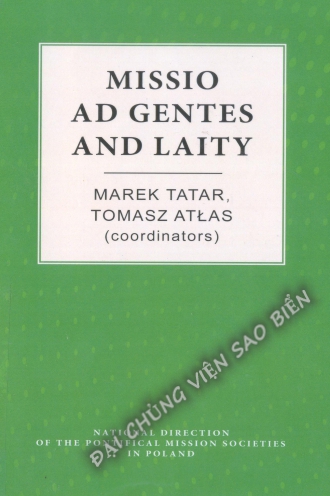
-

-
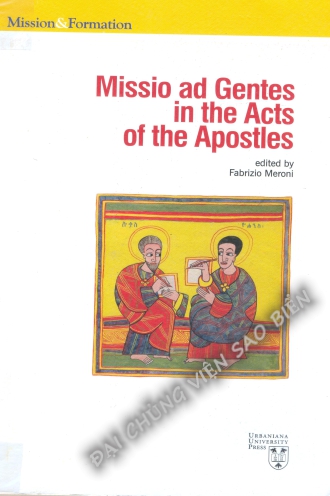
-
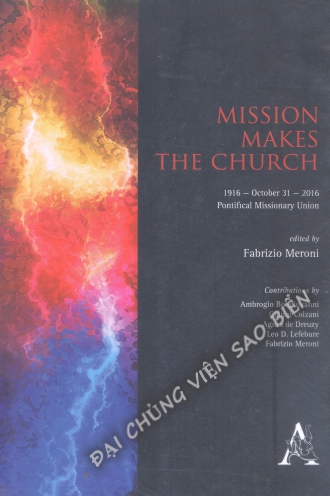 Tác giả: Fabrizio Meroni
 -
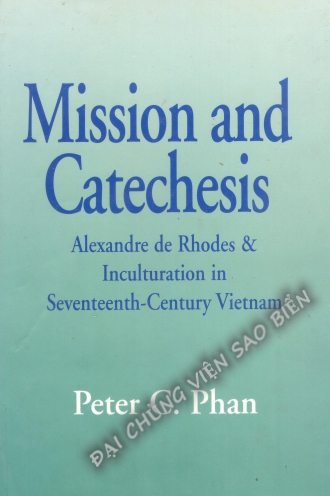 Tác giả: Peter C. Phan
 -

-

-

-
-
-
-
 Tác giả: Martin Caidin, Edward Hymoff
 -
 Tác giả: André Manaranche
 -
 Tác giả: J.Loew
 -
-
-
-
 Tác giả: Lm. Piô Ngô Phúc Hậu
 -

-
 Tác giả: P. Dourisboure
 -

-
-

-
-

-
 Tác giả: Lm Nguyễn Cao Lộc
 -

-
-
-
-

-
-

-
 Tác giả: Hugo Rahner
 -
 Tác giả: Lm. Piô Ngô Phúc Hậu
 -
-
 Tác giả: Arthur F. Glasser