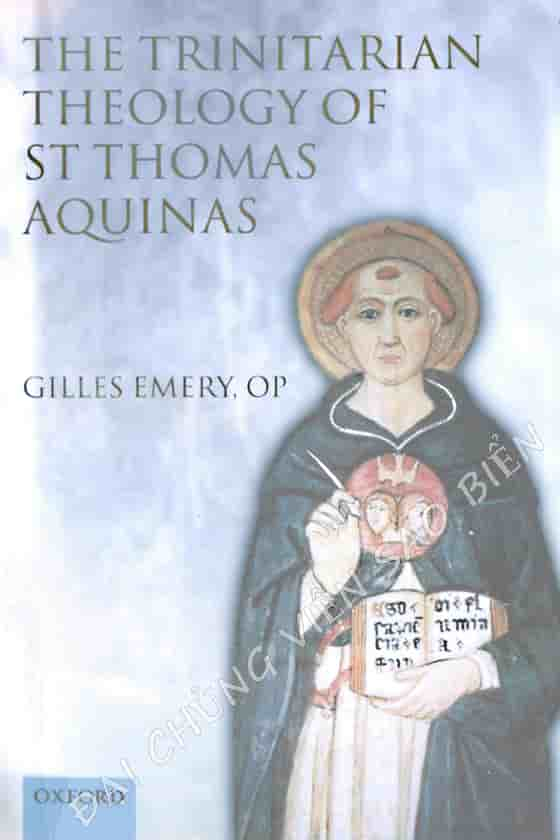
| The Trinitarian Theology Of St Thomas Aquinas | |
| Tác giả: | Gilles Emery,OP |
| Ký hiệu tác giả: |
EM-G |
| DDC: | 231 - Thiên Chúa Ba Ngôi |
| Ngôn ngữ: | Anh |
| Số cuốn: | 1 |
Hiện trạng các bản sách
|
||||||||||||||||
| Abbreviations | xi |
| Inttoduction | 1 |
| 1. The Revelation of tile Trinity | 7 |
| 1. Revelation, Creation, and Salvation | 7 |
| 2. The Revelation of the Trinity through its Works | 9 |
| 2. Thomas’ Exposition of Speculative Trinitarian Theology | 18 |
| 1. Biblical Exegesis and Trinitarian Theology | 18 |
| 2. The Aim of Speculative Trinitarian Theology | 22 |
| (a) The Prerogatives of the Faith | 22 |
| (b) The Rejection of Rationalism | 23 |
| (c) Understanding the Faith | 26 |
| (d) Why Investigate Notions, Relations, and Properties? | 31 |
| 3. The Structure of Thomas’ Treatise on the Triune God | 36 |
| 1. St Thomas: Various Accounts of the Mystery of the Trinity | 36 |
| 2. The Plan of the Trinitarian Treatise in the Sumina Theologiae | 39 |
| (a) Immanent and Economic Trinity | 40 |
| (b) The Essence and the Distinction of Persons: | |
| the Common and the ‘Proper’ | 44 |
| (c) The Game Plan of the Treatise on the Trinity | 48 |
| 4. The Processions | 51 |
| 1. The Word ‘Procession’ | 52 |
| 2. Action, the Source of Relation | 53 |
| 3. The Problems of Arianism and of Sabellianism | 55 |
| 4. A Procession which is the Generation of the Word | 57 |
| 5. A Different Procession, which is that of Love | 62 |
| 6. The Order of the Trinitarian Processions | 69 |
| 7. The Cycle of the Trinitarian Processions | 72 |
| 8. ‘Notional’ Action | 74 |
| 5. Relations | 78 |
| 1. Elements of the Patristic Teaching on Relation | 79 |
| 2. Real Relations in God | 84 |
| 3. The Being of Divine Relations | 89 |
| 4. Relative Opposition: Paternity, Filiation, Spiration, | |
| and Procession | 96 |
| (a) Relative Opposition | 96 |
| (b) Paternity, Filiation, Spiration, Procession | 99 |
| 6. The Person | 103 |
| 1. What is a Person? | 104 |
| 2. Person and Analogy | 107 |
| 3. Correlations in the Greek and Latin Terminology | 111 |
| 4. Subsistent Relations | 114 |
| 5. Relation the Heart of Trinitarian Theology | 120 |
| 7. Trinitarian Monotheism | 128 |
| 1. Personal Plurality in the Triune God | 128 |
| 2. The Theological Terminology of Plurality | 132 |
| 3. A Transcendental Multiplicity | 137 |
| 4. The Consubstantiality of the Persons | 141 |
| 5. Person and Essence: A Problem Raised by Joachim of Fiore | 145 |
| 6. The Word God | 148 |
| 8. The Person of the Father | 151 |
| 1. The Name Which Fits Best: Father | 153 |
| 2. The Father: Principle and Source | 156 |
| 3. The Paternity of the Father: Father of the Son and Father of his | |
| Creatures | 160 |
| (a) The Analogous Network of the Name ‘Father’ | 160 |
| (b) The Name ‘Father’: the Person of the Father and the Trinity | 163 |
| 4. Unbegottenness: The Unengendered Father | 168 |
| 5. From Father to Father | 172 |
| 9. The Person of the Son | 176 |
| 1. Studying the Personal Property of the Son | 176 |
| 2. Studies in the Analogy of the Word: Anthropology and | |
| Trinitarian Theology | 180 |
| 3. The Son, Word of God | 185 |
| 4. The Word, Wisdom, and Splendour of the Father | 192 |
| 5. The Word, Creation, and the Economy: the Father Acts | |
| through his Son | 195 |
| 6. The Word Discloses and Reveals the Father | 201 |
| 7. The Son Gives Us a Share in his Sonship | 204 |
| 8. The Word, Image of the Father | 209 |
| 9. Image of the Father, First-Born of Creation | 214 |


Các tác phẩm cùng thể loại
-
 Tác giả: Augustine
 -
 Tác giả: Catherine Mowry Lacugna
 -
-
 Tác giả: Neil Ormerod
 -
-
 Tác giả: Tihamer Toth
 -
-
-
-
-
-
-
 Tác giả: Thomas F. Torrance
 -
 Tác giả: Vô Danh
 -
-
-
-
-
 Tác giả: Franz Courth
 -
-
 Tác giả: Vô Danh
 -
 Tác giả: Carlo M. Martini
 -
-
-

-
-
-
-
 Tác giả: Thân Văn Tường
 -
-
 Tác giả: A.Ancel
 -
 Tác giả: Nguyễn Văn Thành
 -
-
 Tác giả: Léon Blouet
 -
-
-
 Tác giả: Gilles Emery,OP
 -
 Tác giả: Romano Guardini
 -
-

-

-
-
-
-
-
-
-
-
-
-
-
 Tác giả: Hans Kung
 -
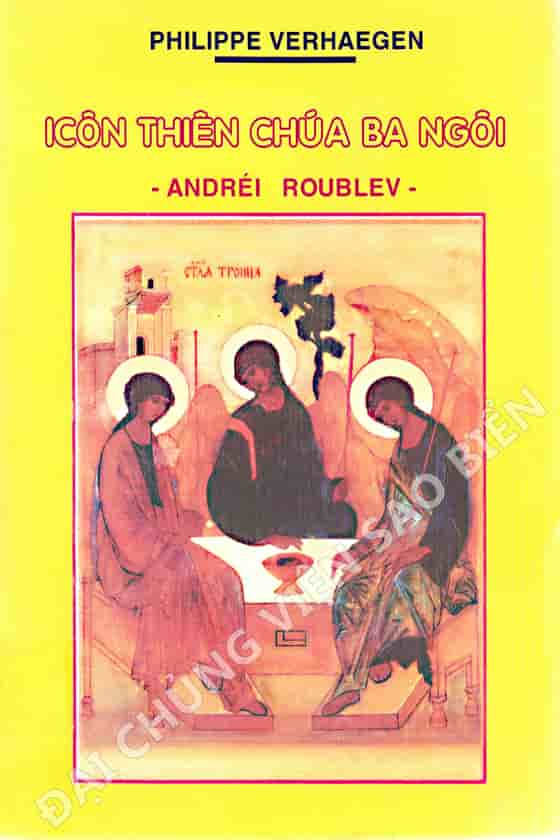
-
 Tác giả: Mary Timothy Prokes
 -

-
 Tác giả: Walter Kasper
 -
-