| Foreword |
|
| PART I: AN INTRODUCTION TO THEOLOGY |
|
| Chapter 1. THEOLOGICAL TRAINING |
|
| a. The need for doctrinal formation: a consequence of our divine vocation |
1 |
| b. Reasons for this study |
3 |
| c. A special reason |
6 |
| d. Content of Theological Study |
8 |
| Chapter 2. THEOLOGY AS A SCINECE |
|
| a. The object of theology |
11 |
| b. Source of theological knowledge: divine revelation |
12 |
| c. The believer uses reason in theology |
16 |
| Chapter 3. THE PHILOSOPHICAL EXERCISE OF REASON AS INSTRUMENT OF THEOLOGY |
|
| a. Spontaneous knowledge and philosophical knowledge |
21 |
| b. Continuity of all knowledge |
23 |
| c. Historical origin of theology: Christian Philosophy |
25 |
| Part II: INTRODUCTION TO CHRISTIAN PHILOSOPHY |
|
| Chapter 4. DEVELOPMENT OF PHILOSOPHY IN CHRISTIANITY |
|
| a. Beginning of theology in Christianity |
29 |
| b. The original synthesis of St. Thomas Aquinas |
31 |
| c. Continuity of Christian Philosophy |
35 |
| Chapter 5. DISPOSITION OF THE CHRISTIAN TOWARD PHILOSOPHY |
|
| a. God and the natural truths of religion |
37 |
| b. Philosophy and the truths of the natural order |
38 |
| c. Christian Philosophy as a common cultural heritage |
39 |
| d. The help of faith not against the use of the intelligence |
40 |
| Chapter 6. THE NATURE OF PHILOSOPHY |
|
| a. History and etymology of the term |
41 |
| b. Wisdom as knowledge of ultimate causes |
42 |
| c. A wise man order everything in relation to God |
43 |
| d. Wisdom as science |
45 |
| e. Philosophy and the orther sciences |
46 |
| Chapter 7. METAPHYSICS OOR FIRST PHILOSOPHY |
|
| a. The Science of being as being |
48 |
| b. Substance and accidents, potentiality and actuality |
49 |
| c. Matter and form |
51 |
| d. God as the universao cause of being: essence and the act of being |
53 |
| e. The properties of being |
54 |
| f. Metaphysics and theology |
55 |
| Chapter 8. OTHER ASPECTS OF CHRISTIAN PHILOSOPHY AND THEIR THEOLOGICAL RELEVANCE |
| a. Metaphysics of man and science of man |
56 |
| b. Particular sciences are in need of metaphysics |
57 |
| c. Theological relevance of the metaphysics of nature |
58 |
| d. Metaphysics and logic |
59 |
| Chapter 9. THE METHOD OF METAPHYSICS |
|
| a. Philosophy begins with wonder |
61 |
| b. Science as the search for the universal and necessary |
62 |
| c. Intelligence and senses |
63 |
| d. Intellectual and sensible certainty |
64 |
| e. Intelligence and imagination |
66 |
| Chapter 10. THE HISTORY OF PHILOSOPHY |
|
| a. Metaphysics and truth |
67 |
| b. Cultural relativism |
68 |
| Part III. METAPHYSICS |
|
| Chapter 11. GENERAL INTRODUCTION TO METAPHYSICS |
|
| a. Metaphysics: the science of being as being |
71 |
| b. The object of metaphysics |
72 |
| c. Being is analogical |
73 |
| d. The principle of non-contradiction |
74 |
| e. Importance of metaphysics for theology |
76 |
| Chapter 12. THE STARTING POINT OF THE METAPHYSICAL ROAD |
|
| a. Being, to be, essence, existance |
77 |
| b. The starting point of metaphysics |
79 |
| c. Metaphysical progress |
80 |
| Chapter 13. SUBSTANCE AND ACCIDENTS |
|
| a. The evidence of change and the truth about being |
82 |
| b. The notion of being applies primarily to substance |
82 |
| c. Accidents: secondary manners of being |
84 |
| d. Substance and accidents related in three ways |
86 |
| e. The "inese" of the accidents |
87 |
| f. Particular importance of relation |
87 |
| Chapter 14. POTENCY AND ACT |
|
| a. Simplicity of these concepts, gathered from the experience of change |
89 |
| b. Motion as passage from potency to act |
89 |
| c. Other metaphysical insights of potency and act |
91 |
| Chapter 15. THE ESSENCE |
|
| a. Elucidation of terms: seence, nature, concept, defination |
92 |
| b. Essence and form |
94 |
| c. The principle of individuation |
97 |
| Chapter 16. THE ACT OF BEING AND THE ESSENCE |
|
| a. Ultimate structure of the finite subsistent |
99 |
| b. Predicamental and transcendental participation |
100 |
| c. The participation of being as basis of the analogy of being |
101 |
| d. Subsistent subject and person: activity follows being |
102 |
| e. Individual and person |
104 |
| Chapter 17. THE ACTIVITY OF CREATED BEING |
|
| a. Esse and nature as priciples of activity |
105 |
| b. Application to the value of human life |
106 |
| c. Beings act according to their nature |
106 |
| d. Activity as the perfection of being: idleness and work |
107 |
| e. Transient and immanent actions |
108 |
| Chapter 18. BEING AND CAUSALITY |
|
| a. Elucidation of terms |
108 |
| b. Origin of the concept of cause: the four causes |
109 |
| c. Material cause and formal cause: theological relevance |
110 |
| d. The efficient cause: creation and causality |
112 |
| e. The instrumental cause |
113 |
| f. The final cause: cause of all cause |
115 |
| g. Direction to end; freedom and love; the order of the universe |
116 |
| h. Importance of the principle of causality |
116 |
| Chapter 19. TRANSCENDENTAL PROPERTIES OF BEING |
|
| a. Predicamental classification of essences and transcendental vision of being |
118 |
| b. Metaphysical discovery of the transcendentals |
118 |
| c. The unity of being |
119 |
| d. The truth of being |
120 |
| e. The goodness of being |
121 |
| f. The common good: law and justice |
121 |
| g. Evil as the absence of good |
122 |
| h. The beauty of being |
123 |
| Chapter 20. CONCLUDING REVIEW OF METAPHYSICS |
|
| a. The analogy of being and our knowledge of God |
125 |
| b. Natural and supernatural wisdom |
126 |
| Part IV: NATURAL THEOLOGY |
|
| Chapter 21. GOD IS |
|
| a. Man can know God: natural and supernatural knowledge |
127 |
| b. Natural theology as highest achievement of metaphysics |
129 |
| c. Philosophy cannot ignore God |
130 |
| d. Reason is led to God |
130 |
| e. Reason not the only factor in our knowledge of God |
131 |
| f. Agnosticism is unreasonable |
131 |
| g. Importance of the rational demonstration of God's existence |
133 |
| h. Limits of the human knowledge of God |
133 |
| i. The problem of atheism |
134 |
| j. The principle of immanence |
135 |
| Chapter 22. WAYS OF DEMONSTRATING THE EXISTENCE OF GOD |
|
| a. Elucidation of terms |
136 |
| b. The first way: motion |
137 |
| c. The second way: activity |
139 |
| d. The third way: generation and corruption |
140 |
| e. The fourth way: perfection ( a summary of metaphysics) |
141 |
| f. The fifth way: order and intelligency |
142 |
| Chapter 23. GOD IS IPSUM ESSE SUBSISTENS |
|
| a. The essence of God |
143 |
| b. The simplicity of God |
144 |
| c. The transcendence of God |
146 |
| d. The supreme goodness of God |
146 |
| e. How God should be loved |
147 |
| f. Immensity, immutability, eternity |
149 |
| Chapter 24. DIVINE OPERATION |
|
| a. God is personal |
151 |
| b. Divine knowledge |
151 |
| c. Divine will: God is love |
152 |
| d. Divine omnipotence |
153 |
| e. God as creator |
153 |
| f. God's presence everywhere |
154 |
| g. Divine freedom and providence |
155 |
| PART V. METAPHYSICS OF MAN |
|
| Chapter 25. INTRODUCTION |
|
| a. Recapitulation: metaphysics as comprehensive knowledge |
157 |
| b. Object of the metaphysics of man |
159 |
| c. Spirit and matter: social sciences and physical sciences |
160 |
| d. Order and method of this study |
160 |
| e. Man as spiritual and corporeal creature |
162 |
| f. Human activity |
163 |
| Chapter 26. INTELLIGENCE |
|
| a. Overview |
165 |
| b. Nature and object of the intelligence |
165 |
| c. Process of understanding |
167 |
| Chapter 27. SIMPLE APPREHENSION |
|
| a. Understanding begins in the senses |
168 |
| b. Abstraction: from the sensible to the intelligible |
171 |
| c. Impression of the intelligible form on the intellect |
171 |
| d. The act of understanding |
172 |
| e. Characteristics of human concept |
173 |
| f. Knowledge of the singular |
174 |
| Chapter 28. JUDGMENT |
|
| a. The operation of judging |
175 |
| b. Judgment and truth |
176 |
| c. Certainty and belief |
176 |
| d. Discursive process of reasoning |
177 |
| e. Self - knowledge, consciousness and reflection |
178 |
| f. Conclusion: knowledge as enrichment of being |
179 |
| Chapter 29. THE WILL |
|
| a. Nature and object of the will. The emontions |
180 |
| b. The good of man |
182 |
| c. The will and the last end |
183 |
| d. Natural inclination of the will as distinct from actual choice |
183 |
| e. Will and intelligence |
184 |
| f. Causality of the act of the will |
185 |
| g. The will and human behavior |
185 |
| Chapter 30. FREEDOM |
|
| a. What is freedom |
186 |
| b. Inner freedom and exterior freedom |
187 |
| c. Freedom of choice: determinism |
188 |
| d. The root of the freedom of man |
189 |
| e. Freedom and necessity |
189 |
| f. Freedom and the good |
190 |
| g. Free volition of evil |
191 |
| Chapter 31: THE HUMAN SOUL |
|
| a. Spirituality of the human soul |
192 |
| b. The soul as substantial form of the body: no reincarnation |
192 |
| c. The spiritual perfection of man |
194 |
| d. Origin of the human soul |
194 |
| e. Immortality of the human soul |
195 |
| Chapter 32. THE PERSON AND HUMAN NATURE |
|
| a. Nature as individuated |
196 |
| b. Person and personality |
197 |
| c. The place of the person in the uinverse |
198 |
| Chapter 33. MAN IN THE WORLD |
|
| a. The social nature of man |
199 |
| b. Natural societies |
200 |
| c. Man and history |
201 |
| d. Human work |
202 |
| e. The santification of work |
203 |
| f. Participation in divine action |
204 |
| Appendix: CATHOLIC DOCTRINE ABOUT MAN |
206 |
| Part VI. ETHICS |
|
| Chapter 34. INTRODUCTION |
|
| a. Metaphysics of the end and of the moral order |
209 |
| b. Free actions |
210 |
| c. Ethics as part of metaphysics |
210 |
| d. Ethical science and moral uprightness |
211 |
| e. Order of this study |
212 |
| Chapter 35. GOOD AND EVIL |
|
| a. The good |
213 |
| b. Participated beings have a good end or purpose |
214 |
| c. The final good moves beings |
214 |
| d. Evil as privation |
215 |
| e. Evil as deodination |
215 |
| f. Evil and freedom |
216 |
| g. Evil as such can neither move nor motivate |
216 |
| h. Physical evil |
217 |
| i. It is imposible for God to be the cause of evil |
217 |
| Chapter 36. THE LAST END |
|
| a. Existence of a last end |
218 |
| b. Identification of the last end |
219 |
| c. Natural last end and supernatural last end |
221 |
| d. Possession of the last end: happiness |
222 |
| Chapter 37. THE COMMON GOD |
|
| a. Proper good and common good |
223 |
| b. The common good of mankind |
224 |
| c. Love with order |
225 |
| d. The false philosophies |
226 |
| e. Ordination of beings to the common good |
227 |
| f. The common good shared in the order of the universe |
228 |
| g. Ordination of each single substance to the common good |
229 |
| h. Direct ordination of spiritual beings to the common good |
230 |
| Chapter 38. MORAL LAW AND CONSCIENCE |
|
| a. Eternal law and moral law |
231 |
| b. Characteristics of the natural law |
232 |
| c. Knowledge of the natural law |
233 |
| d. Content of the natural law |
234 |
| e. Moral sanction |
235 |
| f. Conscience |
236 |
| g. Principles guiding conscience |
238 |
| Chapter 39. MORAL ACTS |
|
| a. Will and freedom |
239 |
| b. Goodness and malice of human acts |
241 |
| c. Moral evil or sin |
242 |
| d. Types of sins |
243 |
| e. Effects of sin |
244 |
| f. Virtues |
244 |
| g. Types of virtues |
245 |
| Chapter 40. SOCIETY AND THE COMMON GOOD |
|
| a. Interrelations among men |
246 |
| b. Friendship and the love of God |
247 |
| c. What is society? |
249 |
| d. History and culture |
250 |
| e. Ordering of intermediate societies to civil society |
251 |
| f. Ordering of the person to the common good of society |
251 |
| g. Peace and war |
253 |
| Chapter 41. THE FAMILY |
|
| a. The nature of marriage |
255 |
| b. The common good of the family |
257 |
| c. Fundamental properties of marriage |
258 |
| d. Marriage and celibacy |
259 |
| Chapter 42. GOVERNMENT, AUTHORITY AND LAWS |
|
| a. Government and politics |
260 |
| b. Authorities and obedience |
262 |
| c. Positive law |
263 |
| Chapter 43. RIGHTS AND JUSTICE |
|
| a. Nature of the juridical order: the juridical mind |
264 |
| b. Rights and duties |
265 |
| c. Private and property |
266 |
| Part VII. HISTORY OF PHILOSOPHY |
|
| Chapter 44. INTRODUCTION TO THE HISTORY OF PHILOSOPHY |
|
| a. Philosophy as instrument of theology |
269 |
| b. Overview of the History of philosophy |
271 |
| Chapter 45. THE HISTORY OF ANCIENT PHILOSOPHY |
|
| a. The historical setting of Christianity |
274 |
| b. Plato (427-348 B.C) |
275 |
| c. Aristotle (384-322 B.C) |
279 |
| d. Neo - Platonism |
283 |
| Chapter 46. THE HISTORY OF CHRISTIAN PHILOSOPHY |
|
| a. There is a christian philosophy |
284 |
| b. The formation of christian philosophy |
285 |
| c. The contents of christian philosophy |
286 |
| d. St. Augustine (354-430) |
287 |
| e. St. Thomas Aquinas (1225-1274) |
289 |
| f. Decadence after St. Thomas |
291 |
| Chapter 47. THE HISTORY OF MODERN PHILOSOPHY |
|
| a. The Modernity movement |
292 |
| b. Humansim |
294 |
| c. Modern philosophy and the Church |
295 |
| d. René Descartes (1596-1650) |
296 |
| e. Immanuel Kant (1724-1804) |
299 |
| Chapter 48. CONTEMPORARY PHILOSOPHY |
|
| a. Overall view |
303 |
| b. Georg Wilhelm Friedrich Hegel (1770-1831) |
304 |
| c. Marxism |
305 |
| d. Other kinds of materialism |
307 |
| e. Existentialism |
309 |
| EPILOGUE |
311 |
| BIBLIOGRAPHI |
313 |
| INDEX OF SUBJECTS |
317 |
| INDEX OF NAMES |
325 |
| Appendix: Pope John Paul II's Address at the University of St. Thomas Aquinas, Rome, November 17, 1979 |
327 |




 Tác giả: Ben Dupré
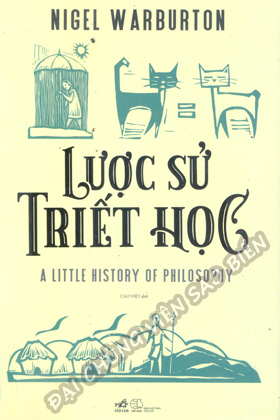 Tác giả: Nigel Warburton
 Tác giả: Thomas Nagel
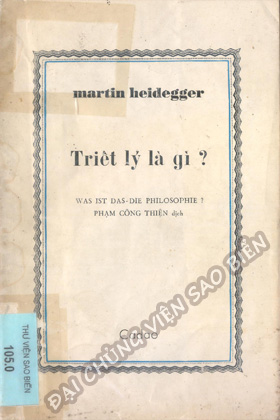 Tác giả: Martin Heidegger

 Tác giả: Bryan Magee

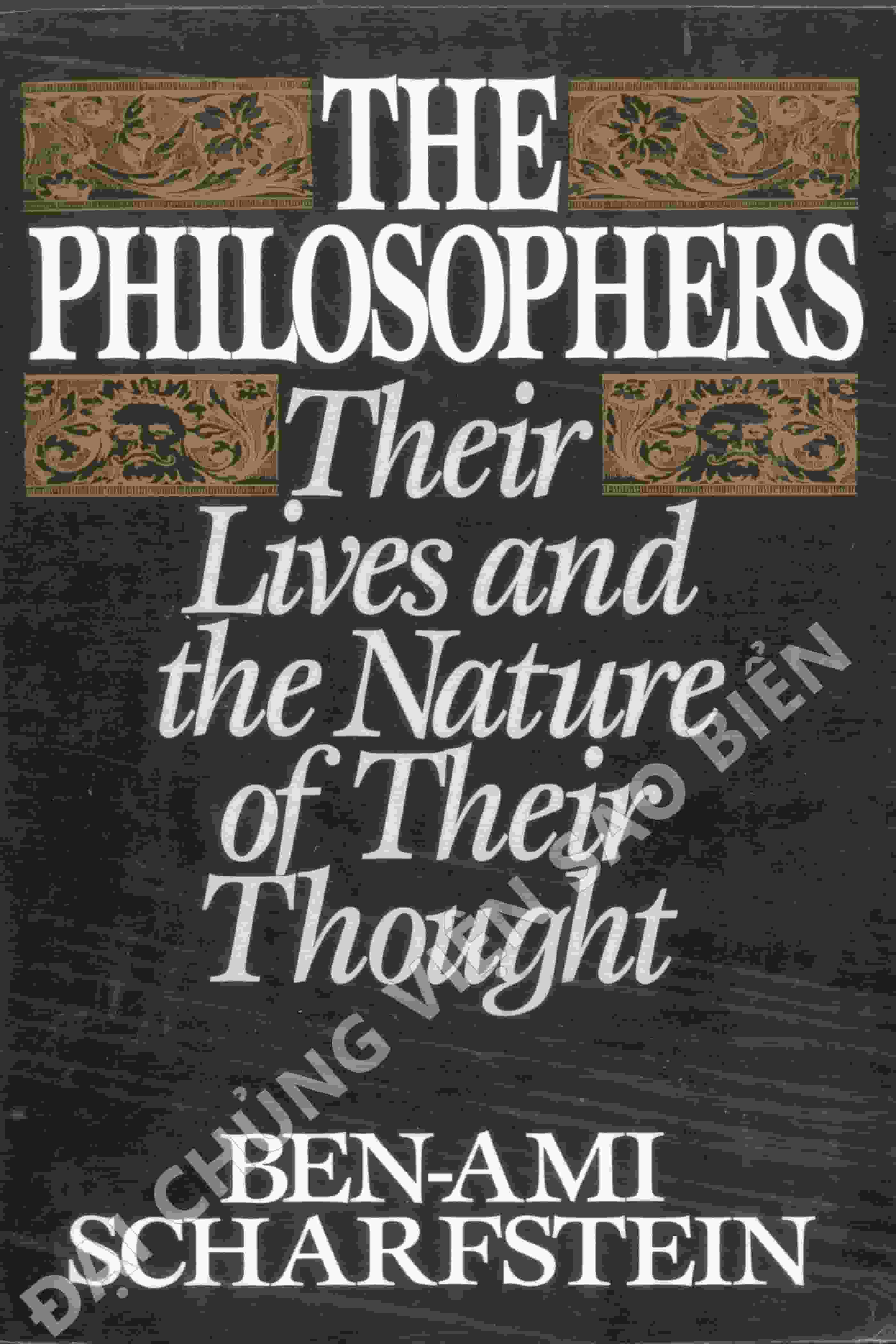 Tác giả: Ben-Ami Scharfstein
 Tác giả: Nhiều Tác Giả
 Tác giả: Jonny Thomson